As close as my macro gear will allow me…

I’ve been itching to re-engage the world of macro for a while now.
Determined to fully engage, I decided to dive in head first.
Over time, I’ve invested in all the components necessary for creating decent-quality macro images. Lenses, tele-converters, extension tubes, tripod gear, and more have been on the shelf waiting for a workout.
This article is about the setup and initial test run in preparation for a more substantial macro project. All studio-based. While I’d like to be shooting outside, we are hitting the dead of winter here in the Northeast. I’m going to keep things warm and dry for the time being.
Those who have shot macro images know full well how challenging it is to manage camera movement at the point where you push the shutter button. The closer you get to your subject, the more challenging it gets. Camera/lens stability is a must. Shooting with a tripod is not always practical and, in many cases, impossible when attempting to capture something up close outside of the studio environment.
For the most part, a good macro lens, appropriate camera settings, and a steady hand are sufficient to capture some pretty cool stuff without a tripod. My previous article, “Taking A Closer Look”, provides a few examples.
The fun part of photography is pushing your creative limits. Maybe even break a rule or two along the way, or a least stretch a few.
Being most fortunate to have the equipment and studio space, I am embarking on a creative “macro mission” to at least stretch the rules a little.
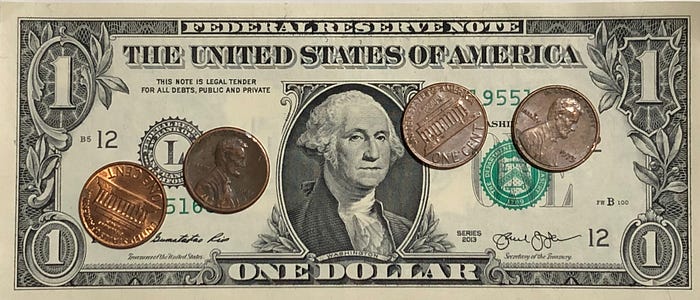
The dollar, to the naked eye, is pretty unassuming. We see it all the time and just pass it along in exchange for goods or services.
That said, I chose a crisp dollar bill as my test subject. We pay little or no attention to the exceptional detail found in the printing of the dollar, so I thought it would be a good candidate to take a closer look as part of the initial equipment setup and test run.
With the test subject chosen, configuring the camera setup became the chore of the day(s). While not complicated, it took the better part of two afternoons to get it right. The stability of the setup was the task at hand.
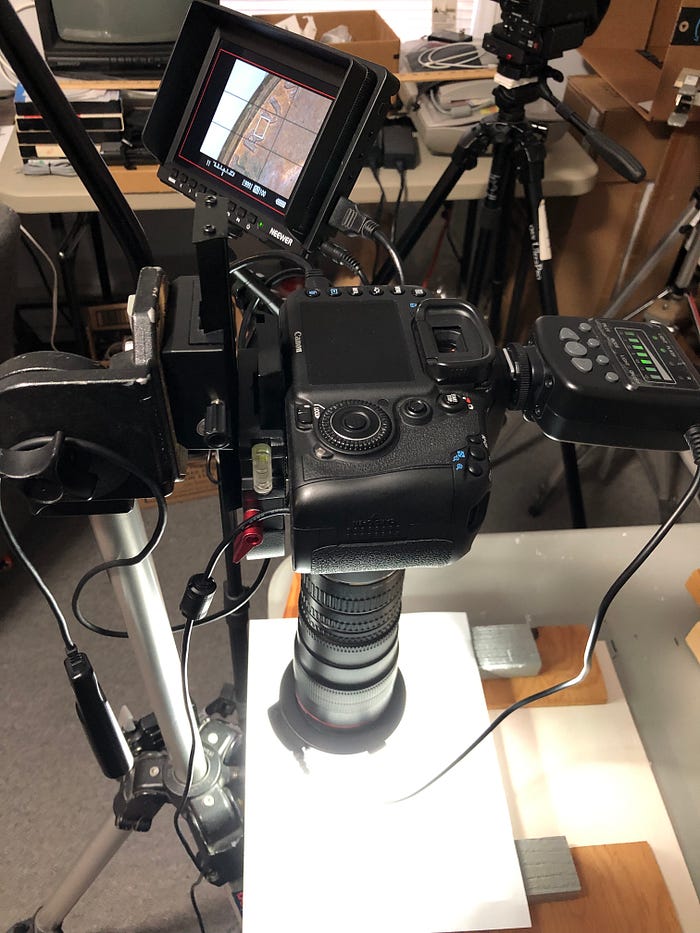
With everything attached, there is a tremendous amount of weight hanging off the end of that tripod. It took multiple setups and take-downs to get it all stabilized, but this is as solid as it’s going to get at this point. It’s pretty good.
The source for all the weight?
It starts with a Canon 7D body with an adjustable tripod adapter. The bulk of the weight originates with the lens and extension tubes, topped off with a ring light.
Did I say stretch the rules a little?
One tele-converter and four extension tubes are stacked between the body and a Canon 100mm macro lens. The lens itself is quite capable. Add an extension tube and things get interesting. Add five tubes, and the rules are starting to get stretched.
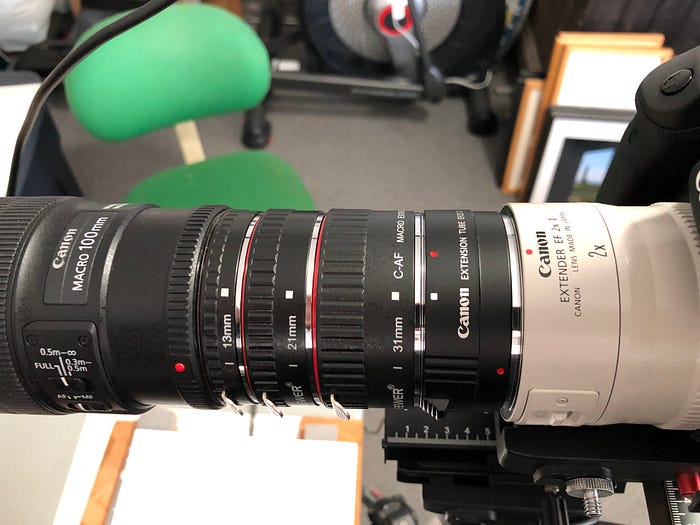
If you are considering the purchase of an extension tube, get one with electric contacts. This allows the camera to maintain communication with the lens. Whether it’s one tube or a bunch like I’m using here, you want to be able to communicate with the lens.
Back to my one-dollar test subject.
I chose to look at the letter “E” in the word “ONE”. More specifically, it’s a look at the center “arm” that is perpendicular to the vertical “stem” of the letter.
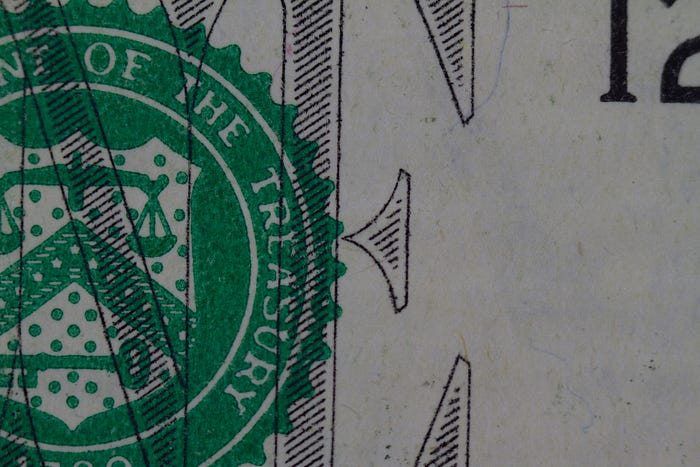
Some pretty fine details in the printing that you never pay attention to when handling a dollar.
Then, there’s a closer look with all five tubes attached.
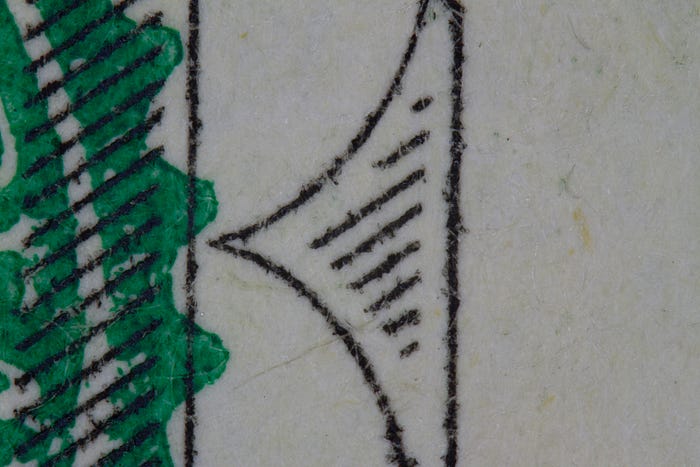
It’s as close as my macro gear would allow me.
Two other components in this setup helped facilitate the whole process of capturing an image like this. An external monitor and a remote shutter release are a must-have for this kind of project.

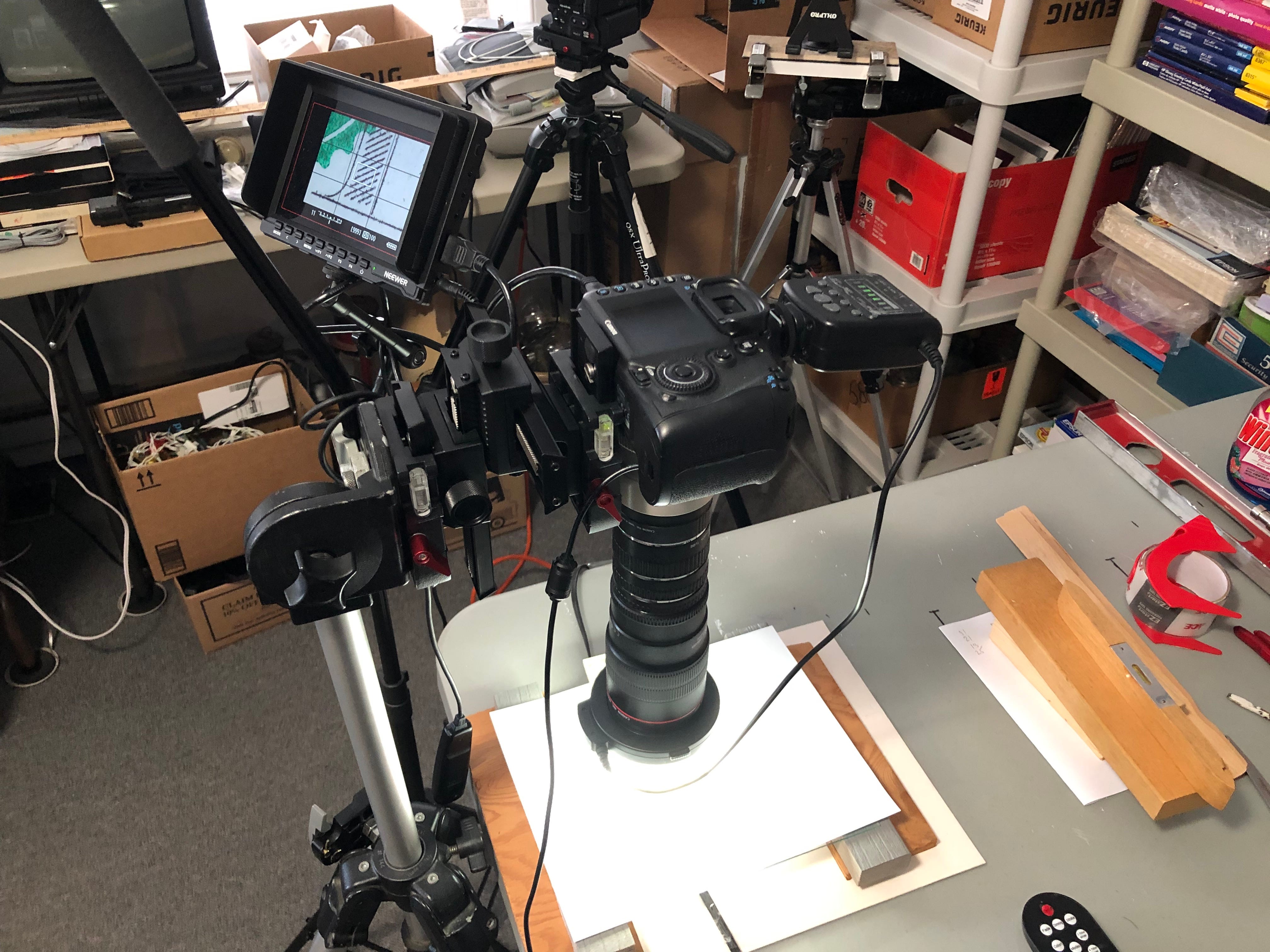
Lastly, I’ll call this the “vertical setup”. It is one perspective that works for certain subjects, like a dollar.
Not all macro subjects lie flat like a dollar, so this setup easily converts to horizontal and every angle in between. Perspective is critical to any image, including macro.
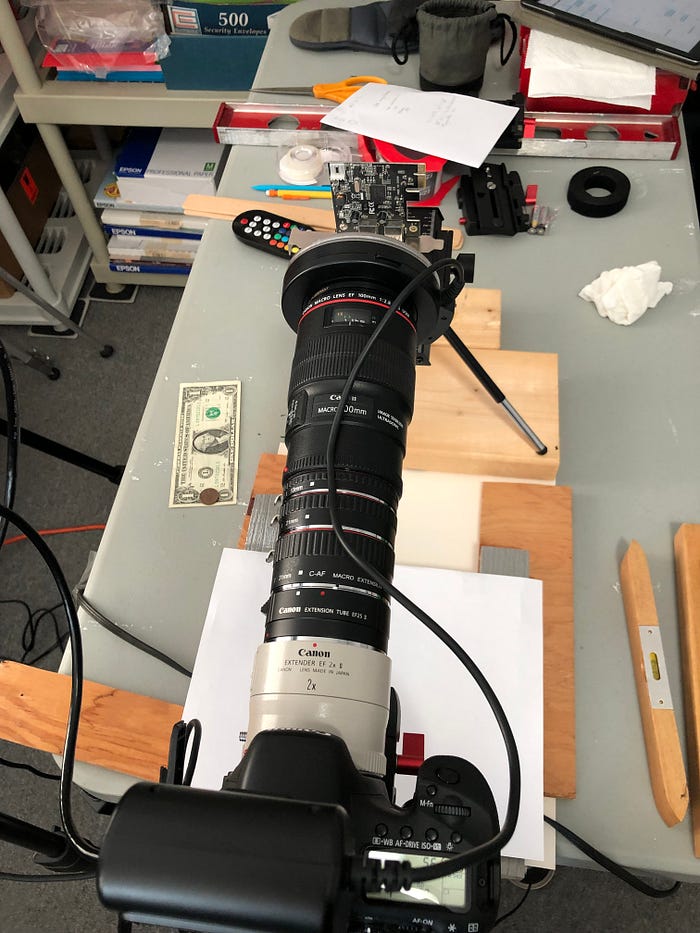
High on my list once I get proficient in handling this contraption…
Macro video. Things moving up close.
Ya, let’s go break some rules!
